People often compare steel vs. wood framing for a barndominium because they want a home that feels open, durable, and flexible. The framing system affects more than what sits behind the walls. It influences ceiling height, clear spans, garage or shop connections, exterior detailing, and the long-term stability of the finished building.
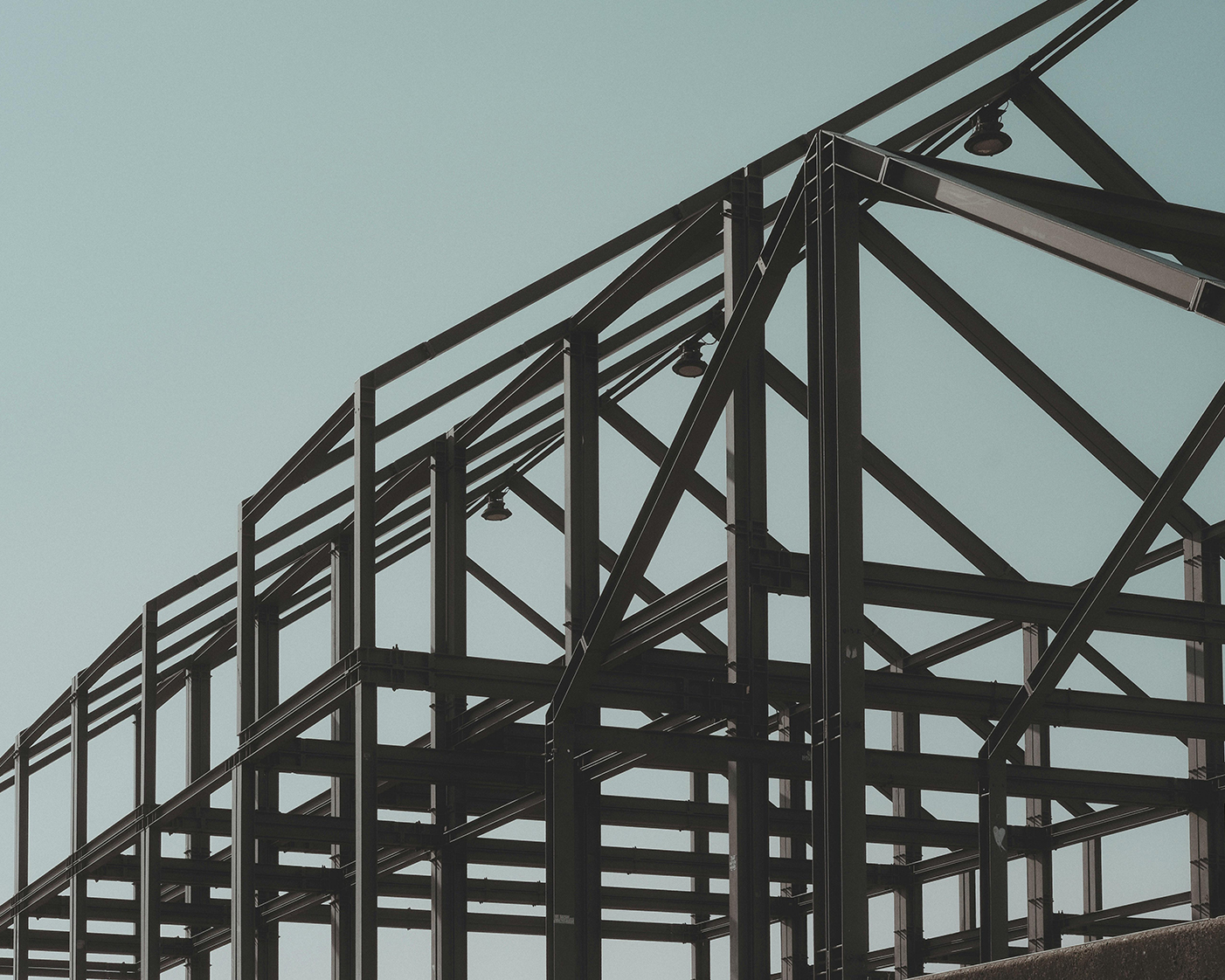
Wood framing is familiar, widely understood, and suitable for many homes. Steel framing is valued for strength, straightness, long spans, dimensional stability, and resistance to common issues like rot, termites, and warping. The best choice depends on the design, the site, the trade strategy, and how much structural flexibility the project needs.
Where steel framing performs best
- Open-concept layouts with fewer interior structural interruptions.
- Large garage bays, workshop areas, mezzanines, and wider roof spans.
- Clean exterior lines where straight framing helps cladding, trim, windows, and doors look sharper.
- Rural properties where durability, moisture resistance, and long-term stability matter.
- Modern barndominium designs with tall ceilings, large openings, and simple bold forms.
Where wood framing can still be the right fit
Wood can make sense for simpler residential layouts, smaller homes, conventional rooflines, and projects where local residential trades are already lined up. It can also be practical when the design does not require long clear spans, tall shop openings, heavy structural loads, or steel-first detailing.
The risk is assuming wood is always simpler or cheaper in the finished project. If the design needs extra posts, beams, engineered lumber, complex bracing, or more movement management over time, the comparison becomes less obvious.
Compare the full building system
Do not compare steel and wood only by the framing material line item. Compare the complete building: structure, labour, engineering, envelope detailing, sequencing, maintenance, and how well the system supports the design you actually want.
Design differences you can see
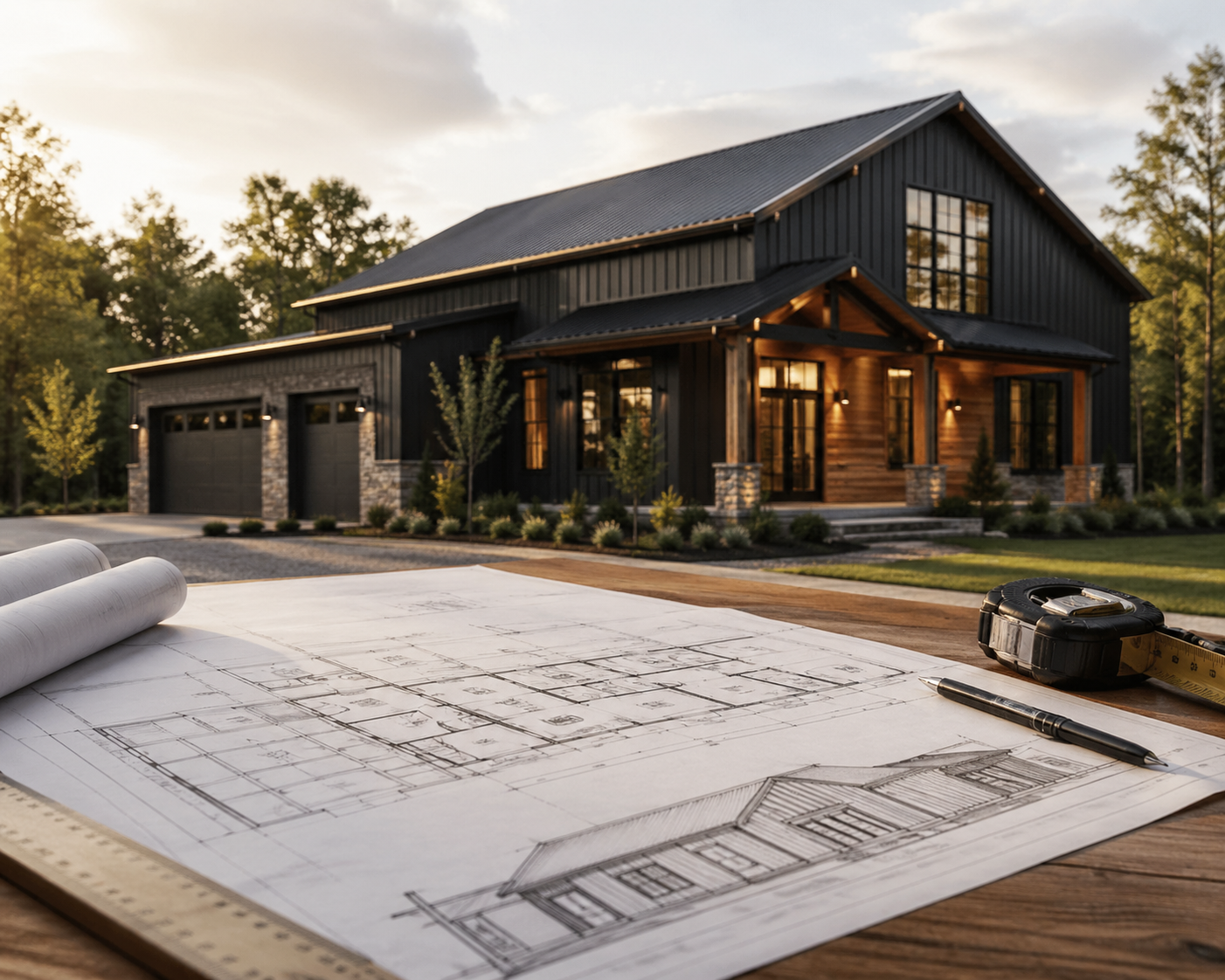
In a modern barndominium, the structure often becomes part of the design logic. Steel can support long roof planes, large openings, simple rectangular forms, attached garages, and clean exterior lines. Those details are visible in the finished home, especially around cladding, glazing, soffits, doors, and roof transitions.
Straightness matters. Small movement or inconsistent framing can show up later in drywall, doors, windows, metal panels, trim, and exterior reveals. That is one reason steel is attractive for clients who want a sharper architectural look instead of a basic rural shell.
Durability in Ontario conditions
Ontario barndominiums need to deal with snow loads, freeze-thaw cycles, wind exposure, rural drainage, and seasonal humidity. Steel is not a substitute for good engineering, proper insulation, or a well-built envelope, but it creates a stable structural base for a durable home.
Moisture control still matters with any system. The wall assembly, air sealing, insulation strategy, ventilation, and cladding details must be designed properly. The advantage of steel is that the structure itself is not vulnerable to rot, termites, or warping in the same way wood can be.
How to choose between steel and wood
- Start with the design goals: spans, ceiling height, garage connection, shop use, and exterior style.
- Review site access, delivery space, crane or lift needs, and local trade availability.
- Compare complete assemblies, not isolated material assumptions.
- Think about long-term durability, maintenance, and how the building may be used in the future.
- Make the decision early, before drawings become expensive to revise.
The bottom line
If you want a simple house with conventional spans, wood may be a practical option. If you want a modern barndominium with open volume, attached shop space, clean cladding, and a durable steel-first structure, steel is worth discussing at the beginning of the project.
Frequently asked questions
Is steel framing better than wood for every barndominium?
No. Steel is strongest when the design benefits from open spans, straight lines, large openings, attached shop space, or long-term dimensional stability. A simpler home may not need those advantages.
Does steel framing make a barndominium more expensive?
The answer depends on the full design. Steel may cost more in one line item, but it can also simplify spans, reduce structural interruptions, improve predictability, and better support the intended form.
Can a steel-framed barndominium still feel warm inside?
Yes. The structure does not determine the interior mood. Warmth comes from layout, natural light, insulation, finishes, wood accents, stone, lighting, and how the living spaces are proportioned.